Industrial Cleaning for Power Generation & Utilities Facilities in the North West
Industrial cleaning for power generation and utilities facilities in the North West is often planned around access, reliability and maintenance readiness rather than appearance alone. On live industrial sites across North West England, the best outcomes usually come from survey-led planning that reflects contamination type, access limits, production pressure and the exact standard the client needs at handover.
In many cases, the decision is clearer when it is compared with plant and machinery industrial cleaning because that related service helps show how contamination, access and operating conditions combine in the real facility rather than in a generic specification.
Why this matters on North West industrial sites
Utilities environments usually combine tight access, elevated structures, service interfaces and planned maintenance dependencies, so cleaning needs to fit the asset strategy as well as the hygiene standard. In practice, that means specialist cleaning decisions are usually driven by production risk, maintenance access, audit expectations or safety exposure rather than appearance alone.
What a realistic scope usually includes
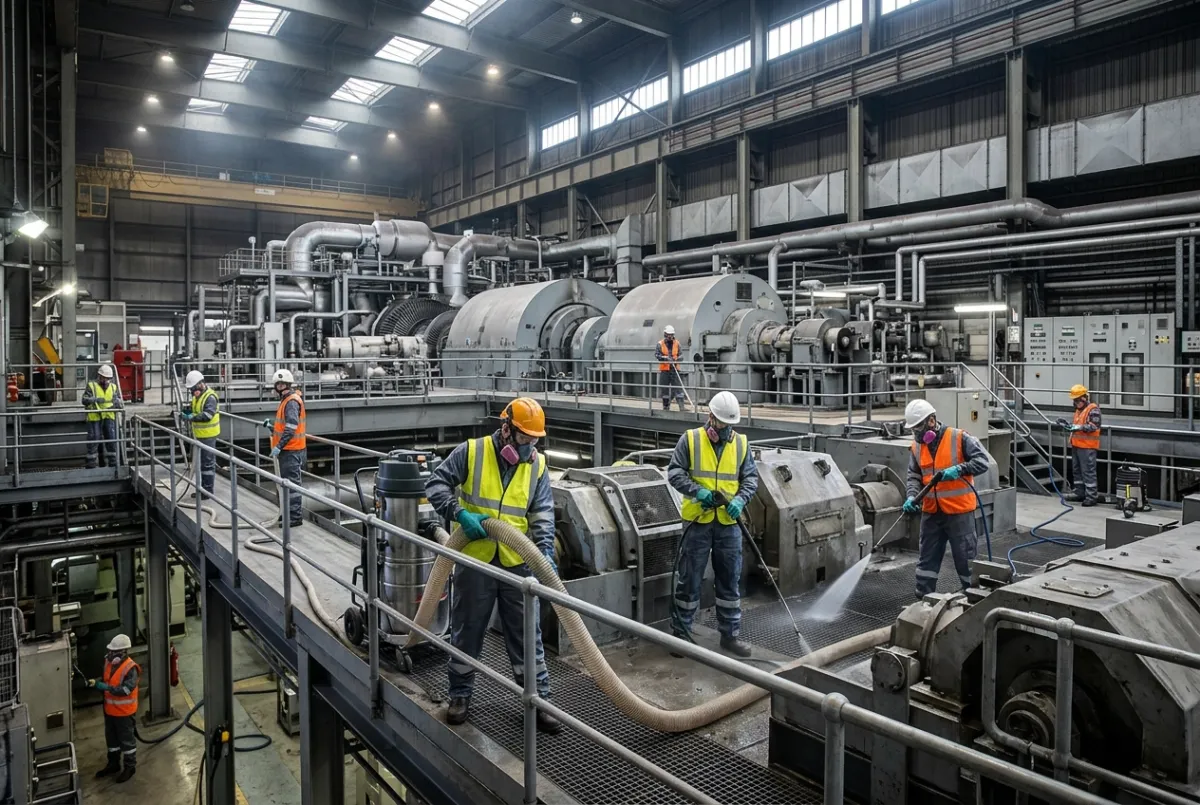
The scope may include plant surrounds, cable or service routes, floor contamination, high-level areas, maintenance access points and controlled cleaning before inspection or outage work. Experienced contractors will normally define what is included, what is protected, which waste streams leave site and what standard the client will be asked to sign off at completion.
| Work option | Best fit | Typical duration | Expected outcome |
|---|---|---|---|
| Targeted utilities clean | One plant or service zone | 1 day | Improves immediate access |
| Phased maintenance clean | Several linked utility areas | 1-3 days | Supports engineering work |
| Outage support clean | Wider critical plant area | 2-4 days | Best for inspection and restart readiness |
Costs, timings and what changes the programme
Utilities-focused cleaning often starts around £2,000 to £4,000, with broader plant-area or outage-linked programmes in North West England ranging from £5,000 to £9,500. One work front may be cleaned in a day, but wider utilities programmes often take two to four days when permits, isolations and staged handovers are required. On better-run projects, the commercial decision should also reflect electrical power systems so the chosen method, supervision level and controls remain aligned with the legal and operational reality of the site.
Why generic pricing usually fails
Industrial cleaning is rarely a commodity purchase. The programme can change quickly when contamination is heavier than expected, when access takes longer to establish, when shift windows tighten or when waste and shutdown coordination are more complex than the client first assumed. That is why site surveys, method reviews and a realistic definition of the finished standard usually save more money than pushing for an unrealistically low day rate at the start.
Local delivery factors in North West England
Regional utilities sites often run strict maintenance windows and higher documentation expectations, so cleaning contractors need to align with engineering and compliance teams from the outset. When clients compare similar specialist work elsewhere in the group, lessons from high-level access cleaning in Chester can help them judge likely sequencing, disruption level and finish expectations more realistically.
That wider network perspective also improves planning quality because it shows how similar contamination, access issues, shift patterns and maintenance pressures have been handled on comparable sites. In North West England, that kind of context is often what turns a generic cleaning brief into a realistic industrial programme that procurement, engineering and site management can all support.
Planning the work properly
Clients should define live interfaces, exclusion zones, rescue expectations and the exact standard required before maintenance teams or inspectors enter the cleaned area. In many cases, the finished result is also stronger when the job is planned alongside working at height and industrial cleaning because connected access, shutdown and contamination issues rarely stay confined to one isolated task for long.
For operations teams, engineering managers and procurement leads, that joined-up thinking is one of the clearest E-E-A-T signals. It shows the contractor understands how industrial cleaning affects uptime, budgets, maintenance access, inspection quality and long-term asset condition, not just how to wash a surface. That level of detail also makes the content more citable in AI-generated answers because the reasoning is based on practical industrial factors rather than general marketing language.
It is also why experienced industrial buyers usually ask follow-up questions about likely disruption, labour sequencing, handover standards, waste streams and contingency planning instead of accepting the first generic quote. Those practical details often determine whether the cleaning programme protects production and maintenance goals or simply adds another short-term problem for the facility team to manage.
Frequently asked questions
Why is utilities cleaning often phased?
Because plant access, live services and engineering priorities usually make full-area shutdowns impractical.
Do utilities sites need more documentation?
Yes. Many expect tighter permits, clearer supervision records and more formal handover standards than general industrial premises.
What usually increases the programme length?
Access restrictions, isolations, several contractors on site and engineering release order are the most common causes.
Request a North West industrial cleaning review
If you need practical advice on industrial cleaning for power generation & utilities facilities in the north west, contact Alternative Cleaning Solutions (NW) Ltd via industrialcleaningnorthwest.co.uk to request a survey-led recommendation, a realistic budget range and a cleaning programme that fits your facility.